Wild Ginger
Asarum canadense
Se encuentra en
- Familia botánica
- Aristolochiaceae
- Zona de cultivo
- 3-8
- Altura
- 6-8 in.
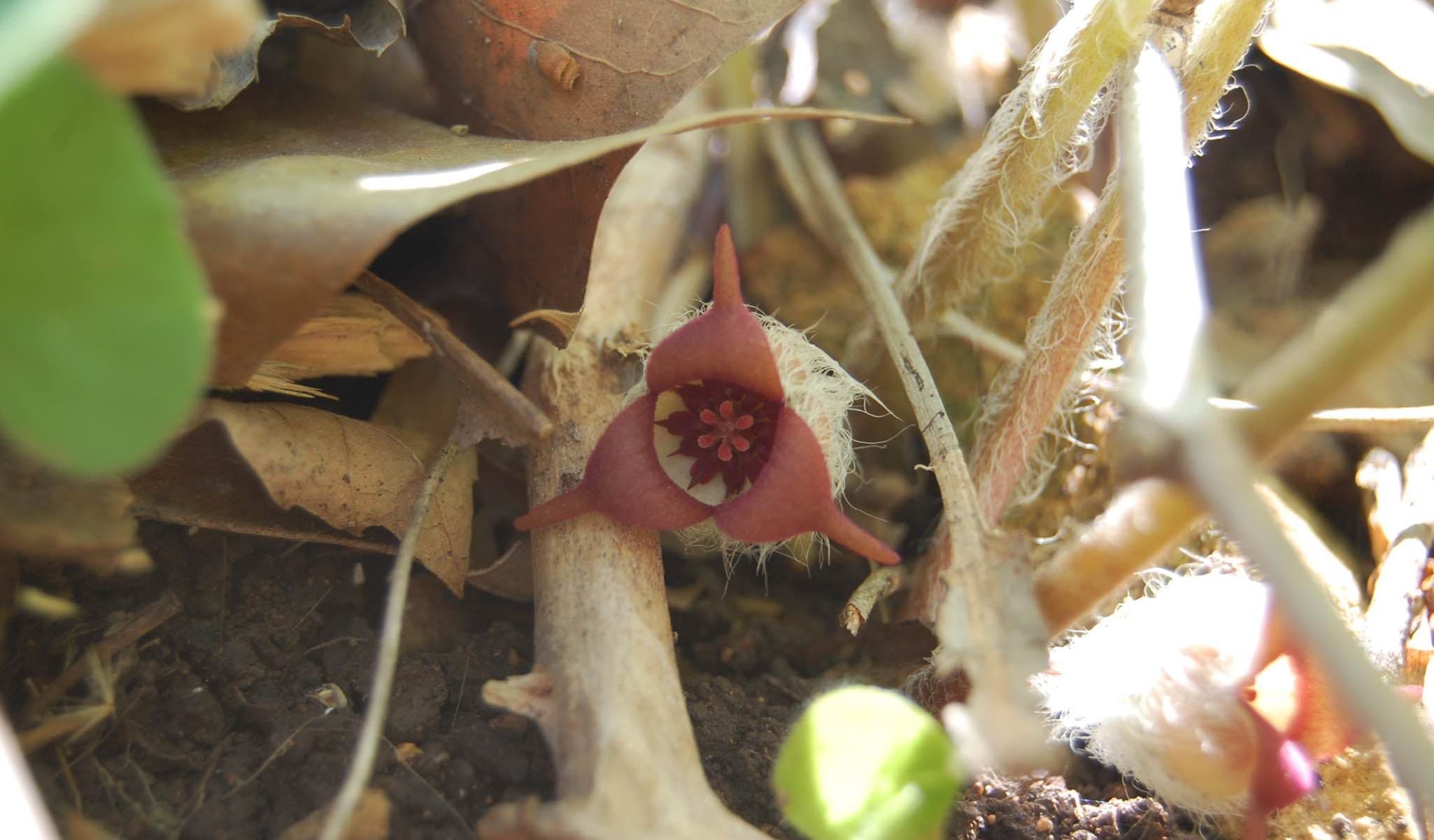
Bloom description: The maroon flowers nestle on the ground in early spring and can only be properly enjoyed by lying on the forest floor with it. The flowers are 1 in. in diameter and resemble little brown jugs that have been knocked over on the ground.
Leaf type: The heart-shaped, dark-green leaves are the main attraction for this woodland wildflower. They vary in size from 3-6 in. in diameter.
Garden uses: Wild Ginger is a perfect choice for a native groundcover. It likes dappled sun to full shade with moist, well-drained soil. As the colony spreads, it forms a lush green carpet that compliments any woodland garden.
Wildlife benefits: Provides shelter for small mammals and amphibians.
Escuchar
Mostrar transcripción
DR. COMPTON'S TRAIL BEDS TRANSCRIPT
NARRATOR: Cody George, Crystal Bridge's horticulturalist, discusses Dr. Neil Compton's native plant beds near Crystal Spring, which our grounds crew has uncovered and renewed.
CODY GEORGE: The terraces just south of Crystal Spring Pond are remnants of what was Dr. Compton's original trial beds for Crystal Spring Garden that he had. These were covered up with many layers of leaves, as well as a layer of Japanese honeysuckle. So after we first noticed these terraces in the garden, we removed the leaves and then we removed the honeysuckle, and what was left were these 12 nicely flattened terraces on the side of the hillside. These terraces were marked out by different rocks that were placed around - most of the rocks were in fact intact, so we only had to replace a few of them. And later on we saw a document that had an original plant lists for Crystal Spring Garden. And there are plants that are in these terrace beds that are on the list, like roseshell azalea, and beautybush. So we're happy to display these beds, and we add to these beds - we add Ozark native plants to these beds just to help further Dr. Compton's legacy.